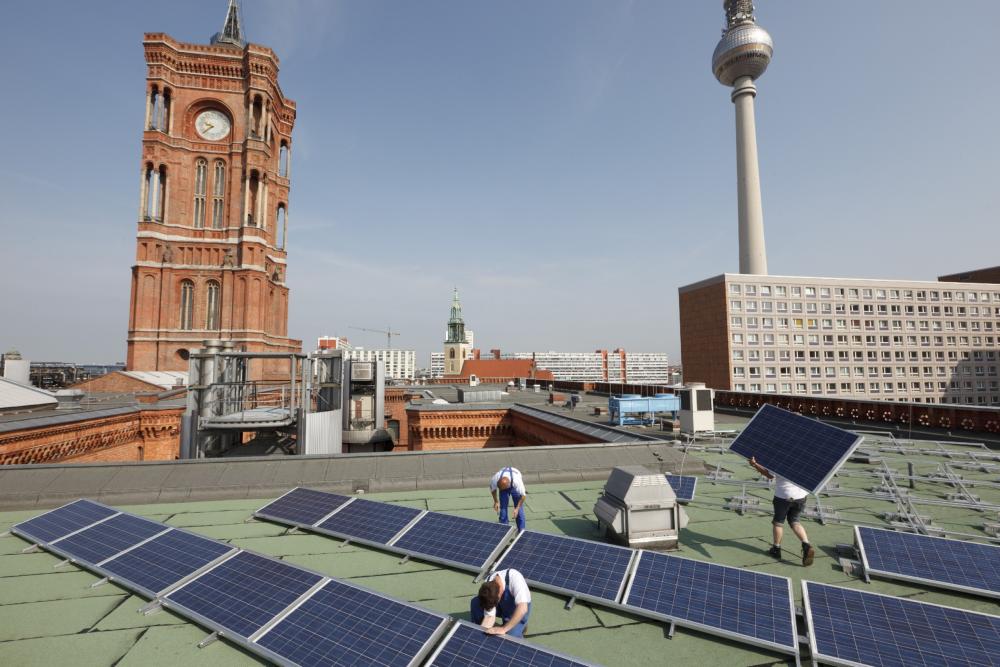

In case of Photovoltaics the light energy is directly converted into electrical energy.
When the sun’s electromagnetic rays hit a semiconductor, the electrons start moving, voltage is generated and electricity flows
Photovoltaic plants consist of numerous solar cells which are assembled to modules and operated in various powerful photovoltaic installations on free areas or on roofs.
Why Photovoltaics?
Photovoltaic is a comparatively simple and flexible technology for different locations. There is also great potential in the city on the roofs of residential, commercial, or industrial buildings. Solar cells could also be installed in facades or road surfaces in the future. The prices for solar modules have fallen drastically over the past years, so that photovoltaic installations can be build and operated much cheaper nowadays.
Photovoltaics are considered worldwide as the backbone of renewable energies together with wind power. They contribute 7 percent to the total net electricity generation in Germany. Photovoltaics play a central role for the climate protection in the concept for a „climate-neutral Berlin 2050“ together with other technologies such as combined heat and power (CHP), heat pumps and energy storage.
What does the BEA do?
The Berliner Energieagentur operates over 50 photovoltaic installations in Berlin and is one of the most important actors in the housing sector. We finance, plan, build and operate the installations on the roofs of our customers.